Druze

Community

Explore books about the Druze community:

  • by Laila Raslan

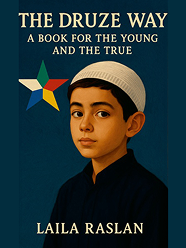
    This book is the first Druze faith book ever written just for children. It was made with care, love and honesty – so every Druze child can learn about their roots in a way that feels real and easy to understand. It is not just a storybook. It is a doorway into the quiet truths of the Druze faith – truths that have been protected for a thousand years, now made gentle and clear for the hearts of the young. Each chapter tells the story of our values, our path and the special Light that lives inside each of us. Every word was chosen to help you feel proud of who you are and at peace with the journey you walk.

  • by Laila Raslan

    Nizar and the Roar of the Bear is an inspiring children’s story that explores themes of compassion, courage and trust, set against the rich cultural backdrop of a Lebanese Druze village. This beautifully written tale follows young Nizar as he learns that true strength lies not in force, but in understanding and kindness.

  • by Robert Brenton Betts

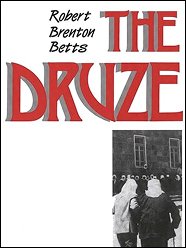
    In the first complete account of the Druze, Robert Brenton Betts provides a general survey of the history, traditions, and society of this secretive Arab sect. Betts, who has spent a great deal of time with the Druze, interweaves his firsthand observations with a wealth of primary and secondary sources, describing not only their thousand-year history but also their political significance in today’s Middle East.

  • by Anis I. Obeid

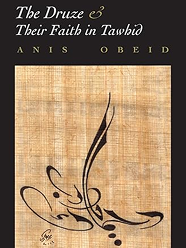
    As a small sect that emerged from Islam over a thousand years ago, the Druze religion and society has long been cloaked in a tradition of secrecy. Veiled from the outside world, the religious tenets have been vulnerable to distortion, misunderstanding, and misrepresentation. In this book Dr. Anis Obeid, a Druze layman, provides a penetrating analysis of Druze scriptures and beliefs (Tawhid). Presenting a chronological narrative of the foundation and development of the faith, he explains the historical conditions and religious rationale behind this closed religion.

  • by Shadi Farraj

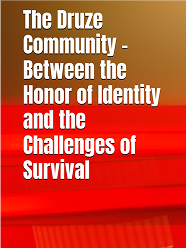
    This book explores the rich history, culture, and identity of the Druze community, with a focus on prominent historical figures who have shaped its political, social, and religious landscape. It delves into the challenges faced by the Druze people in the modern era, examining their unique position in the Middle East and their role in regional conflicts and national movements. Through a blend of historical analysis and personal narratives, the book offers a comprehensive understanding of Druze contributions to society and their ongoing struggles to preserve their cultural heritage and identity in a rapidly changing world.

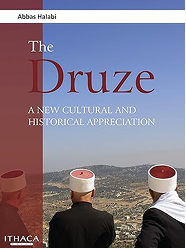
  • by Abbas Halabi

    The Druze, a much-misunderstood Muslim sect primarily inhabiting the Levant, have endured centuries of persecution by orthodox elements hostile to Islam’s rich sectarian diversity on account of their esoteric divergence from mainstream Islam. As a result, they have become a ‘fighting minority’, as described by one of their most illustrious leaders. Druze religious belief branched out from tenth- and eleventh-century Shi’ism, and includes elements derived from Islamic mysticism. It enshrines all religious schools, but posits istelf as the sole path to mystical knowledge. Druze teachings are kept secret, so libel and slander by their opponents have been generally left uncorrected.

  • by Kais M Firro

    Following the war of 1948 Palestine’s Druzes became part of the state of Israel. Overwhelmingly rural, they sought to safeguard their community’s age-old ethnic independence by holding on to their traditional ethno-religious particularism. Ethnicity and ethnic issues, however, were ready tools for the Zionists in the pursuit of their policy aims vis-à-vis the state’s Arab population. Central among these was the cooptation of part of the Druze elite in an obvious effort to alienate the Druzes from the other Arabs – creating “good” Arabs and “bad” Arabs served the Jewish state as a foil for its ongoing policy of dispossession and control.

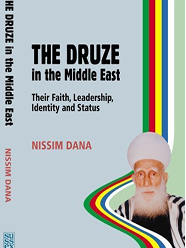
  • by Nissim Dana

    Discusses the Druze in the Middle East in general, with a particular focus of the Druze relationship with the State of Israel. Part I — Faiths, Commandments, and the Life-Cycle — deals with practical religious commandments, religious rights and ceremonies, and the life-cycle of the individual. Original material is presented that places the Druze unequivocally as members of an independent faith with their own unique identity. Part II — Spiritual Leadership and Community Organisation — treats the spiritual leadership in various countries of the Middle East throughout their history. This leadership is of great importance in administering the life of the Druze community.

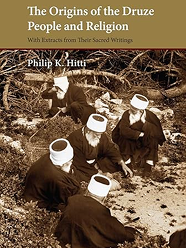
  • by Philip Khuri Hitti

    Discusses the Druze in the Middle East in general, with a particular focus of the Druze relationship with the State of Israel. Part I — Faiths, Commandments, and the Life-Cycle — deals with practical religious commandments, religious rights and ceremonies, and the life-cycle of the individual. Original material is presented that places the Druze unequivocally as members of an independent faith with their own unique identity. Part II — Spiritual Leadership and Community Organisation — treats the spiritual leadership in various countries of the Middle East throughout their history. This leadership is of great importance in administering the life of the Druze community.

Explore more Indigenous and minority communities of the Middle East and North Africa through the AIMEE network.