Yezidi
Community
Explore books about the Yezidi community:
-
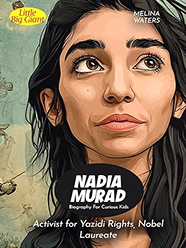
by Melina Waters
Nadia Murad’s journey is one of resilience, courage, and unwavering hope. Born into the Yazidi community in Iraq, Nadia’s life took a harrowing turn when she was captured by ISIS militants in 2014. She endured unimaginable hardships but emerged not just as a survivor, but as a powerful voice for her people. This biography introduces young readers to her extraordinary story, illustrating the strength of the human spirit even in the darkest of times.
-
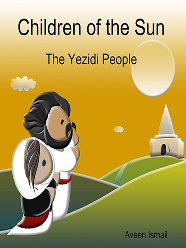
by Aveen Ismail
What are the beliefs and symbols of the Yezidi faith? This book introduces readers to the stories, customs and heritage of the world’s most ancient religion, the Yezidi people. This work is aimed at general readers and young Yezidis.
-
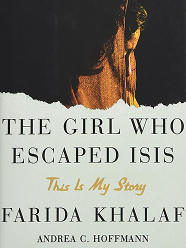
by Farida Khalaf and Andrea C. Hoffmann
A young Yazidi woman was living a normal, sheltered life in northern Iraq during the summer of 2014 when her entire world was upended: her village was attacked by ISIS. All of the men in her town were killed and the women were taken into slavery. This is Farida Khalaf’s story. A riveting firsthand account of life in captivity and a courageous flight to freedom, this astonishing memoir is also Farida’s way of bearing witness, and of ensuring that ISIS does not succeed in crushing her spirit. Her bravery, resilience, and hope in the face of unimaginable violence will fascinate and inspire.
-
by Nadia Murad
A memoir of survival, a former captive of the Islamic State tells her harrowing and ultimately inspiring story. On August 15th, 2014, when Nadia was just twenty-one years old, this life ended. Islamic State militants massacred the people of her village, executing men who refused to convert to Islam and women too old to become sex slaves. Six of Nadia’s brothers were killed, and her mother soon after, their bodies swept into mass graves. Nadia was taken to Mosul and forced, along with thousands of other Yazidi girls, into the ISIS slave trade.
-
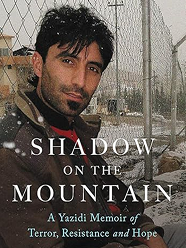
by Shaker Jeffrey and Katharine Holstein
Shaker Jeffrey’s life has been an odyssey of courage, cunning, and desperation. His journey began as a fatherless Iraqi farm boy. As a child he hung out with American troops and practiced his English. Soon he was helping gather information about terrorists, becoming one of the youngest combat interpreters to work for the United States government, even attracting the notice of General Petraeus.
-
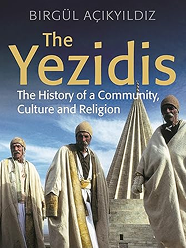
by Birgül Açikyildiz
Yezidism is a fascinating part of the rich cultural mosaic of the Middle East. The Yezidi faith emerged for the first time in the twelfth century in the Kurdish mountains of northern Iraq. The religion, which has become notorious for its associations with ‘devil worship’, is in fact an intricate syncretic system of belief, incorporating elements from proto-Indo-European religions, early Iranian faiths like Zoroastrianism and Manichaeism, Sufism and regional paganism like Mithraism. Birgul Acikyildiz here offers a comprehensive appraisal of Yezidi religion, society and culture.
-
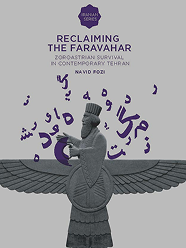
by Navid Fozi
Reclaiming the Faravahar is an ethnographic study of the contemporary Zoroastrians in Tehran. It examines many public discursive and ritual performances to show how they utilize national, religious, and ethnic categories to frame the Zoroastrian identity within the longstanding conflict between Iranian Shiˁa and Arab Sunnis, defining and defending Zoroastrians’ identity and values in Shiˁi dominated Iran.