Zoroastrian

Community

Explore books about the Zoroastrian community:

  • By Dr. Khodadad (Khodi) Kaviani

    A sister and her brother share with classmates their Norooz (New Year) experiences. They live in Yazd, Iran, the city of beautiful wind catchers. They talk about spring cleaning, carpet washing, chaarshanbeh soori, preparing the Haft-Seen, plus other activities during this festive time of year. They reveal why people say, “Norooz Peerooz! [Wishing you a victorious Norooz!], and King Jamsheed’s association with Norooz, the start of spring! They also learn about the Zoroastrian roots of Haft-Seen.

  • By Roshan Rivetna and Dinaz Kutar Rogers

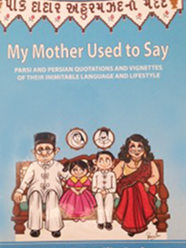
    With illustrations by Kaizin Pooniwala, this delightful compilation captures and records — lest future generations growing up in the West forget — priceless heirlooms, including over 1000 Parsi and Persian quotations, fun phrases and timeless words of wisdom, ingenious home remedies for all ailments, and nostalgic memories of growing up in Parsi ‘baugs.’ It is a great way to remind and regale those who grew up on the Indian subcontinent and Iran about a part of their heritage they left behind.

  • by Shaporji Aspaniarji Kapadia

    ZOROASTRIANISM is a religion much commented upon by a few enthusiastic oriental scholars, and less understood by the general public. Out of the millions of believers of this faith in the bygone ages, there now remains a handful of devout followers, known as the Parsis. I have, therefore, ventured to put before my readers a brief sketch of the teachings of this divine prophet. I hope, that the strangers to the faith may find in it food for philosophic enlightenment, and the Zoroastrians themselves a subject for deeper and wider researches in the untold wealth of sublime theology and philosophy, now looked up in the monumental tomes of the ancient Avesta writings.

  • by Maneckji Nusservanji Dhalla

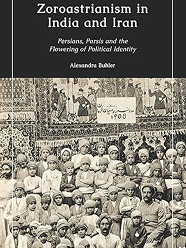
    Zoroastrian Civilization: From The Earliest Times To The Downfall Of The Last Zoroastrian Empire 651 A.D. is a historical book written by Maneckji Nusservanji Dhalla. The book explores the history and development of the Zoroastrian civilization, from its earliest times to the downfall of the last Zoroastrian empire in 651 A.D. The author provides a detailed account of the religion, culture, and society of the Zoroastrian people, who were one of the most influential civilizations of ancient Persia. Dhalla delves into the origins of the Zoroastrian religion, its key beliefs and practices, and the role of its prophets and leaders throughout history.

  • by Andrew D. Magnusson

    The second Muslim caliph, Umar ibn al-Khattab, once reportedly exclaimed, ‘I do not know how to treat Zoroastrians!’ He and other Muslims encountered Zoroastrians during the conquest of Arabia but struggled to formulate a consistent policy toward the adherents of a religion that was neither biblical nor polytheistic. Some Muslims saw Zoroastrians as pagans and sought to limit interaction with them. Others found ways to incorporate them within the empire of Islamic law.

  • by Mary Boyce

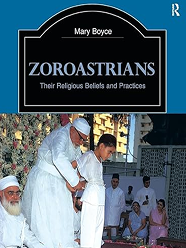
    This book traces the continuous history of the faith from the time it was preached by Zoroaster down to the present day – a span of about 3,500 years. First taught among nomads on the Asian steppes, Zoroastrianism became the state religion of the three great Iranian empires and had a remarkable influence on other world faiths: to the east on northern Buddhism, to the west on Judaism, Christianity and Islam. With the conquest of Iran by the Muslim Arabs, Zoroastrianism lost its secular power, but continued to survive as a minority faith. Despite its antiquity, it remains a living religion.

  • by Mary Boyce

    This book traces the continuous history of the faith from the time it was preached by Zoroaster down to the present day – a span of about 3,500 years. First taught among nomads on the Asian steppes, Zoroastrianism became the state religion of the three great Iranian empires and had a remarkable influence on other world faiths: to the east on northern Buddhism, to the west on Judaism, Christianity and Islam. With the conquest of Iran by the Muslim Arabs, Zoroastrianism lost its secular power, but continued to survive as a minority faith. Despite its antiquity, it remains a living religion.

  • Pheroza J. Godrej  Firoza Punthakey Mistree

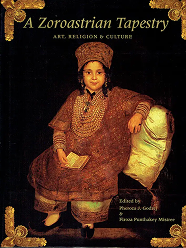
    The Zoroastrians are the followers of the Iranian Prophet Spitaman Zarathushtra. They entered recorded history in 550 BCE and for nearly 1,000 years their religion flourished as the imperial religion of three great Iranian empires. During this period, Zoroastrianism was a dominant religion, and its beliefs influenced Judaism, Christianity and later Islam. The vast extent of their empire brought the Zoroastrians in contact with people of different races and traditions. Their willingness to absorb and adapt to these influences led them to develop a distinct art form.

Explore more Indigenous and minority communities of the Middle East and North Africa through the AIMEE network.